It’s not quite day one as I haven’t done any hiking today, but it gives some important background to the whole trip.
For various reasons, this past year felt a lot like a dragging myself through the valley of darkness. Recently, I’ve been so exhausted that for once, I doubted the wisdom of this kind of holiday. However, the flights were booked and I decided to go anyway.
I flew to Bilbao and spent the first night in the albergue on the French Camino in Pamplona. I took my pilgrim’s credential – once a pilgrim, always a pilgrim. This brought back some nice memories from ten years ago – almost to the day.
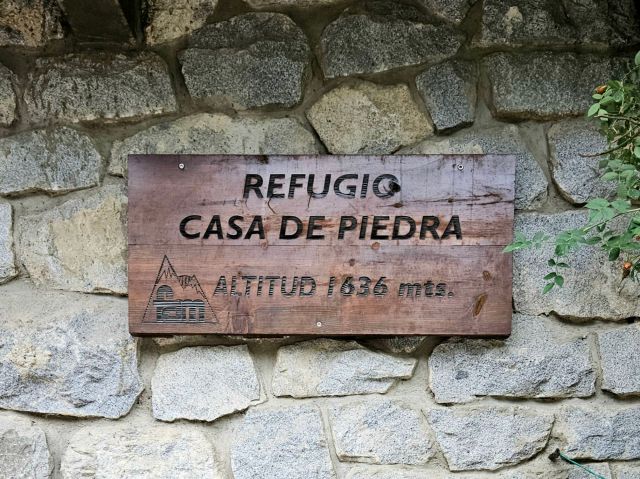
This morning, I found a cafe and over a cup of strong coffee, I finally decided where in the Pyrenees I was going to start. I phoned the refuge and booked a place for tonight. I was rather pleased with that as this trip started to finally take some shape. That joy didn’t last long. I soon found out that there was only one bus a day from Pamplona to Jaca and then to Panticosa – leaving at 3:30 in the afternoon which really was a waste of time. I was awfully annoyed with myself about not checking it beforehand to eventually realise that it wouldn’t have made any difference. I was getting more and more tired and frustrated. It was hot and I dehydrated myself which didn’t help, but only saw it later. The bus to Panticosa wasn’t going to get me to the refuge Casa de Piedra, even though it’s accessible by road. I was looking at the map and I’d have to walk the last 4 miles on the road or take a taxi. While I wasn’t keen on walking on asphalt with all the gear (more about this in a moment), I don’t take taxis in the mountains! It was so unthinkable that I literally cried. I again questioned whether I can do this kind of holiday anymore and wondered if I’d come back in a worse condition than I left. That last bit was equally unthinkable. I mean wasting the holiday.
The gear… I’ve been hiking all my life and I have no idea how on earth I could pack myself like I did!!! My backpack is far too heavy, but I can’t think of anything that I could leave behind. I really don’t know what I was thinking of while packing. Actually, if I wanted to be fair to myself, it wasn’t completely thoughless packing. I had in mind my trip from 2017 when I didn’t stay in mountain huts which changes the way you pack. Though what really had an impact on my packing was a recent reflection on things that I ‘carry’ in my life. One question that I need to answer during this trip is: How am I going to repack my life’s backpack?
Anyway, as I do, I decided to get on with it all and it was going to be a taxi. I would have excused myself anyway as soon as I saw that road!
I got on that bus and relaxed a bit. As we were getting closer to the Pyrenees, there was also more peace. During the last hour from Jaca to Panticosa, I started feeling that it all would be well.
Seeing these views from the bus was enough to bring me peace and energy.
When I got off in Panticosa, I started looking for a taxi. There were phone numbers at the bus stop, but I really don’t like phoning people. There was a woman talking on the phone, so I waited until she finished and asked her. At that moment, a car arrived and she told her husband that I needed to go to Casa de Piedra. He gave me a huge welcoming hug and said that, of course, they would take me there. It turned out that they were from Venezuela and worked in one of the hotels next to the refuge. As it happens, they asked my name, where I was from etc. When I said that I lived in Exeter, he only exclaimed loud ‘no’. Imagine that! Nearly fifty years ago, he was sent to Exeter for an English course to polish his English. He asked if I knew a place called Heavitree. I laughed in reply – that’s where my parish church is and where I work, I said.
Mario and Miriam were my life savers. They told me to ask at the hotel’s reception if I wanted to see them. Mario said that I was a fighter and that I’d be OK even with my backpack. How has he come to this conclusion 🤔? There is some truth in it!
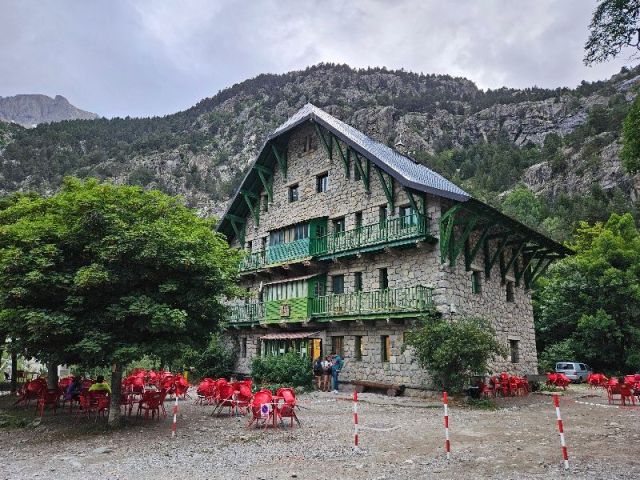
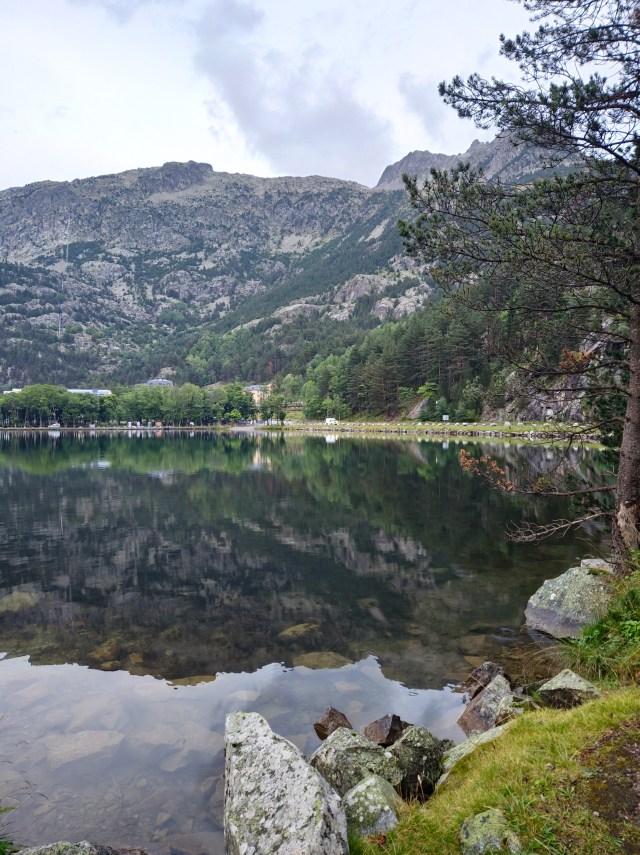
I got to Casa de Piedra with uplifted spirit, left my stuff and went to walk around to stretch my legs and enjoy the views.
I agreed for a brief coaching session that evening. We were going to play it by ear as I didn’t know where I would be, but both: my coach and I thought that it would be great to connect while I’m in the mountains. I was laughing so much when we were on Zoom. I could feel how different I looked in comparison to this morning. There was a massive thunderstorm soon after we started and I had to run back, but I love thunderstorms and I laughed even more. I watched that thunderstorm and then everything around in such amazement. For some reason, it makes me think of Anne when she first arrived and was exploring the Green Gables. I must have fallen asleep with a huge smile on my face.
I’ve always been very aware of the power of words – positive and negative. I try to say what I mean and mean what I say. It’s not always easy and often requires choosing words carefully, but that’s the key to clear and authentic communication – communication with others but also with yourself.
However, we all have – I definitely do – our own sayings that might not be so carefully chosen. Sometimes we make them up, sometimes we borrow them from other people and use them often – sometimes without actually meaning the words that we speak.
A week before my fortieth birthday I was talking to someone about the detailed plans for my birthday weekend. It turned out that there was a change which I didn’t like, to say the least, but I couldn’t do anything about it. I don’t think that I will ever forget the following exchange. I remember exactly where we stood, what time it was and every single word… I will survive – I said. Of course, you will survive… This struck me like lightening and I said: No, no, hang on a moment. I don’t want to survive! No, you don’t want to survive. You want to thrive – came the answer. Exactly! And that’s what I’m going to do… I said – out loud but very much to myself.
This chat didn’t take more than 30 seconds but stayed with me for good. Almost instantly I stopped saying I survive – in any tense, in any context and in any language. In fact, I might have not realised the impact of this phrase if the quoted conversation wasn’t in English. Over the last eighteen months or so I got more and more convinced that it wasn’t just a figure of speech. My friend and I had been using this phrase for years. It was like our personal joke, but I think it was shaping my reality more than I realised.
There’s always been that wild and crazy part of me striving for greatness, for truth… for hearing people… for seeing the opportunity, the potential – in people, places, organisations, situations… – and wanting to develop it and build on it; that part of me ready to go against the current, taking the risk, not caring for the price to pay – whether it was time, energy, money… – as long as there was something meaningful and great to create or grow; that part of me that really wanted to make a difference. For a long time, that part of me was awfully shy and often pacified by the one saying You’ll survive. Over the last five years, the balance of these forces has been changing dramatically.
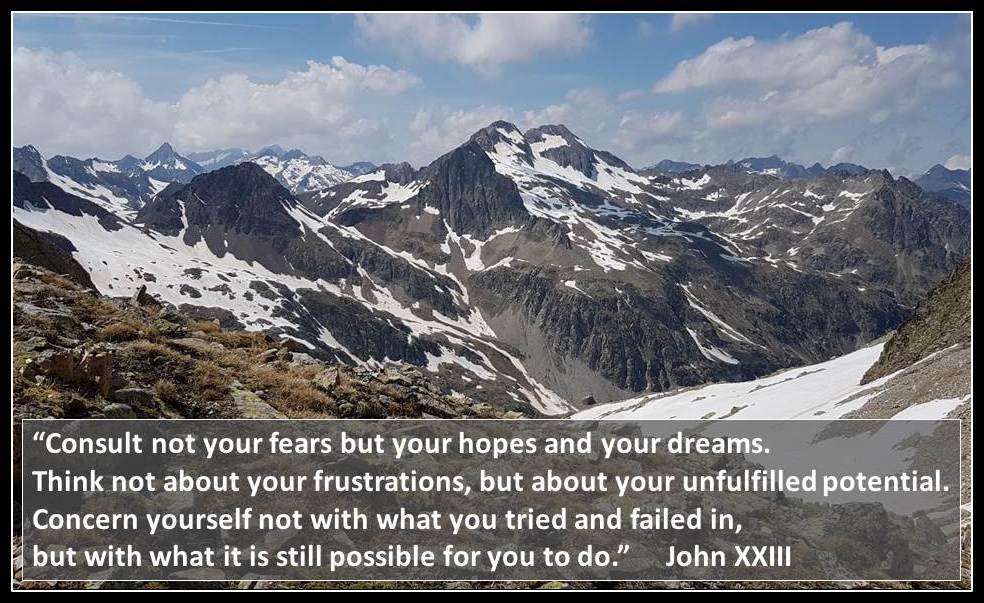
It is like an inner battle and now the survival is being kicked out most of the time. There is no more acceptance of an average, mediocrity. No more acceptance of a maintenance mode. No more thinking ‘It will work out somehow’. I guess that this is some impact of Fr James Mallon’s book, Divine Renovation, on my personal life. What this book did to me in the first place was making me a rebel against the current state of the Church. It caused a very strong sense of dissatisfaction with business as usual and at the same time gave me hope that it could be different. Writing this, I’ve realised that it caused the same dissatisfaction with the maintenance or should I say survival mode in my personal life, too. That’s the feeling which you get when you get to a point when you see so clearly that things are going in the wrong direction, that you need to change the course, and you just know that you don’t want to or even can’t go back. There might not be a clear path ahead – it might still be covered with snow – but you know that you can’t go back on the old one.
It’s all a work in progress…
God gives us life – life to the full, not a long-term survival! He wants us to thrive! He wants us to be happy and satisfied – not just in eternal life but in this one, too. It doesn’t mean there is no more struggle, that everything is nice and easy and that you live happily ever after in a fairy tale style. It’s much more about the reason why I’m here and about knowing the purpose of my life and my being. It’s about doing things because I know who I am and why I am, rather than doing things that will give some sense to my existence. There is a fundamental difference between the two.
Now, the plan is to thrive and help others thrive, too…
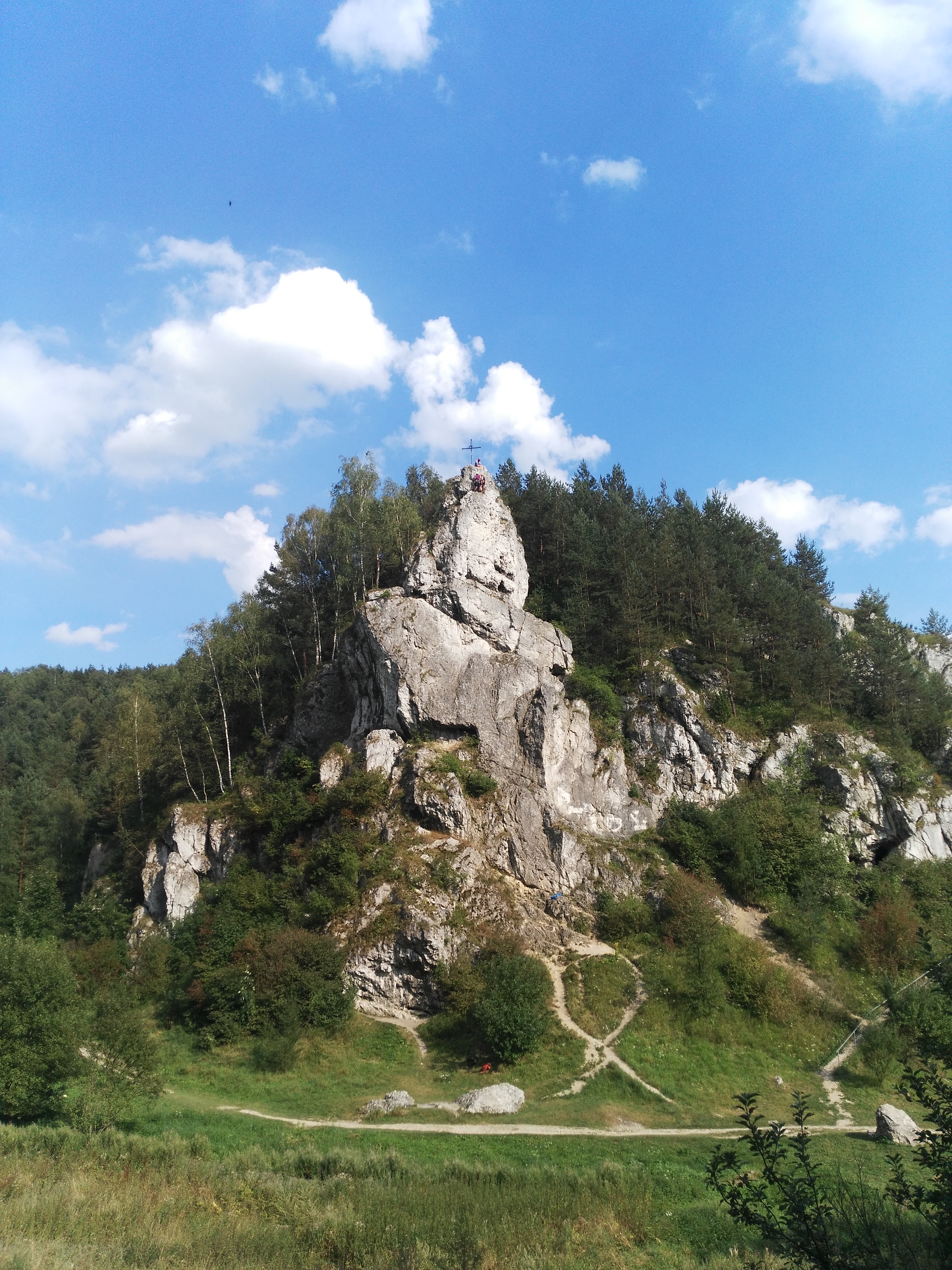
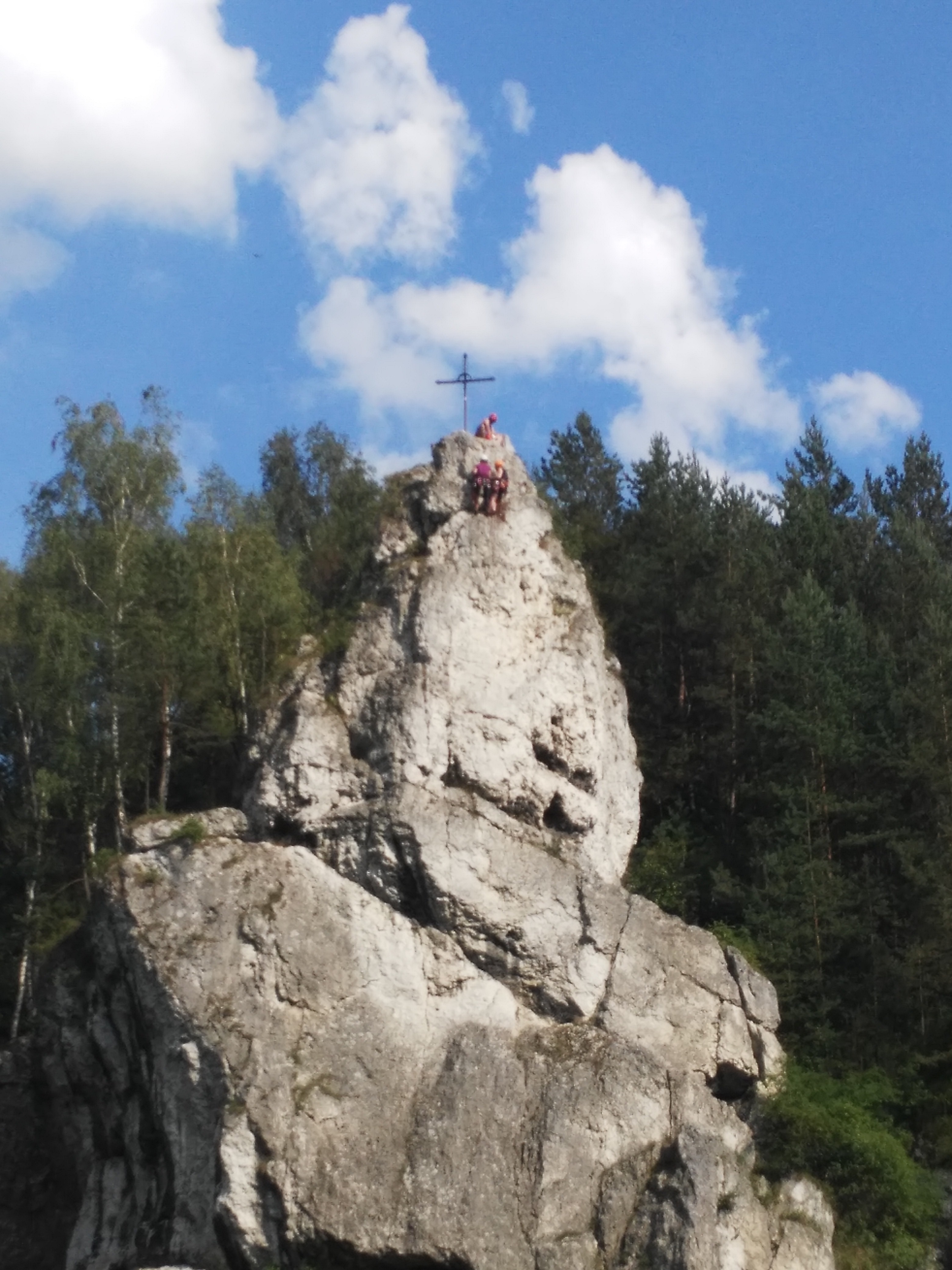
This post should have appeared a long time ago, but I needed to process all this and make some sense of it. In the morning, on Saturday the 12th of August, I started a long-awaited rock climbing course. I arrived on Friday night to avoid getting up in the early hours on Saturday. I arrived at Sen o Dolinie, our base camp, so to speak, much later than I planned – all due to looking for perfection but that’s not important right now. I was a bit concerned about arriving after 10pm. I walked into the house full of people and wondered whether I actually knew what I was doing. Though I must admit that the moment I walked in I felt like I got home and saw people who I knew for ages. It was such a lovely feeling. Saturday was like they were doing a great washing in heaven. There was no chance that we could start climbing outdoors. After meeting the team and getting all the gear we went to Forteca – indoor climbing centre in Krakow. I didn’t like it from the beginning but the first few hours were OK. We did a bit of top-rope climbing. For those who have no clue about climbing – you have a rope secured on the top of the climbing wall – in Polish we call it fishing rod climbing. I talked about it a bit in my post about Clip n’ Climb but I might find a picture to show it clearly later on. In the afternoon we did a bit of lead climbing and that wasn’t funny at all. Like I already said I didn’t like Forteca. It was nothing like climbing walls in Exeter or in Warsaw – all the holds and steps there are polished and slippery – not very pleasant for learning. Climbing in a tower was a killer for me. Very quickly I felt stuck. I didn’t feel like I had enough strength in my hands and arms or that my legs and arms were long enough to reach from hold to hold. We didn’t have chalk and as soon as I got nervous (Believe me, I did!) my hand became sweaty in seconds, so I knew I wouldn’t hold myself for long. I could not only feel but see my legs trembling… I eventually got where I was supposed to get but I was far from enjoying it. Not to mention that feeling ashamed of my fear and lack of strength. Experience of failure away from other people’s eyes is bad enough but having people watching your every step is a hundred times worse. Kuba, our instructor, said that it would be easier in the crags and I did believe him but still wasn’t totally convinced how much easier. All the way back to the camp I was thinking that maybe climbing just wasn’t for me. OK, let’s be honest, it’s true that I hadn’t trained enough before I got here and I don’t think that my body was generally stretched enough, so I can partly put it on lack of training or preparation. Still, the feeling and the idea of giving up was so strong. Very strange for me as I rather don’t give up things after the first day. Even when I was a child I had always given myself a good chance to try things before I had even thought of giving up. Of course, I couldn’t think of quitting the course. 1. I’m flipping too ambitious for that. 2. The lovely people around wouldn’t let me do it. 3. It wouldn’t be fair on Weronika, who was my climbing partner. 4. Perhaps the most important – I couldn’t stand a thought that something that I had dreamed of and wanted to do for so long just wasn’t for me. I can’t remember when I was put to such a test – physically and psychologically. Maybe on the first day on de Camino? Still, I don’t think that it was that bad then. Even if I didn’t have enough strength then and I wasn’t used to such heat, I was definitely familiar with cycling! I knew I could do it. I had an early morning on Sunday. The only Mass I could go to was at 7 am and I couldn’t count on having enough energy left to go to Krakow in the evening (ideally I would have loved to go to Mass to Dominicans’). I had some ‘Sunday’ clothes in my backpack but for some reason decided to wear my trekking trousers and a t-shirt. Perhaps subconsciously I wanted to check out the welcoming and the hospitality in the parish :). It was an experience in itself. You can imagine a village church at 7 a.m. on Sunday morning – mainly older people and all dressed up for a feast. This isn’t a criticism. In fact, I do love the idea of people making an effort to make Sunday a special day even by dressing up. That’s just another story I guess. Like I expected I was sticking out a bit at that Mass. I didn’t take a seat of any regulars, so I was safe. I could feel a few eyes on me at some point but nothing beyond that. No comments – good or bad – no hellos either. Again, that’s something for another story… When I got back to the house I bumped into Kuba who asked me if I had been running. ‘What?’ I thought to myself but I just gave him a bit surprised look and I said ‘No, I’ve just been to Mass’ and left it there as he was going to bring his little boy down for breakfast. Now, let’s go back to climbing. The weather was good, so we went to practise lead climbing we had learnt yesterday. It was easier than indoors and I did feel more comfortable. I’m very surprised that I didn’t have any problems with practising ‘flying’. I knew that I would have to jump off on a loose rope at least once, so the belayer could practise the actions when the lead climber fell. To my great surprise, I was just fine with ‘falling’. In retrospection, I think I would like to try belaying a person who was at least the same weight as me. Weronika is lighter, so ‘catching’ her was fairly easy. Maybe next time. The other half of the day we spent on climbing with removable protection and I started to enjoy it which was a relief, I have to say. Not that my doubts had gone completely but I definitely was in a much better place than on Saturday. On Monday we were climbing near the base. Plenty of climbing with removable protection, building anchors etc. Pretty enjoyable stuff, so I was happy. However, I could sense that it wouldn’t last too long. On Tuesday, we again went to the crags nearby and practised everything that we had learnt so far. I began to feel more confident. Things were becoming easier, too easy perhaps… I could sense that a test was yet to come and I was right. The challenge came the following day. The crags that Kuba led us to didn’t seem too difficult. Weronika went first and had a moment of a struggle but from the ground, I didn’t really see why. I did see as soon as I passed the second bolt. It was a hot day and we still didn’t have enough chalk. I had a good step under my left foot and a good hold for my left hand, a very slippery step for my right toe (the toe not the foot!) and a similarly bad hold for two or maybe three of my right fingers. I was perhaps halfway between the bolts, so on a bit of a loose rope and I needed to push myself up on that right toe so my left hand could reach the next hold. You might need to do a bit of hard work imagining this (I wish I could draw!). Breaking those moves into such details has no training value or I should rather say no climbing training value. There is, however, a life learning for me. First, let me tell you what happened. I obviously didn’t trust that I could push my body from that tiny toe step far enough to get to the next hold with the left hand, so I was holding onto the good hold and thinking about my next move. Anyone who has ever tried climbing knows that you can hold like this only for a short time and you either make a move or you are done. Of course, I was analysing for far too long. I should have either taken a step or two down to the last bolt and ask my belayer for a rest or make a move up. I kept holding. You can guess – a moment later there was a shout ‘falling!’. You have to warn your belayer if you have enough time. Though, I suppose that by that time Weronika was expecting this anyway. The fall, this time not a training one, wasn’t bad. I expected it to be much worse. I had a short rest and started climbing again and repeated the whole story again. The second fall was worse and I hit my ankle against the rock. Nothing dramatic, I just registered that it happened, that’s all. I had another rest and thought to myself that I either had to give up, which wasn’t really an option, or make a quick move and get to the next hold without thinking. It worked and I finished the route without much trouble. Now, my life lesson… I’m not going to analyse my climbing technique which I’m sure has to be improved. Those of my friends who have some idea about climbing might be already laughing, but a technical struggle is irrelevant here. Just try to imagine it again. I’ve got a good step and a good hold on the left – both pretty secure – and a little and slippery hold and step on the right. Without relying on those insecure from my point of view holds I was about an inch away from the next hold that I tried to reach. Literally an inch, maybe an inch and a half. This means that I had to push myself up only a little bit from that toe step and hold really for a moment on my three right fingers so my left hands could grab the next secure hold. I can assure you – it really was a moment – but you know what I had to do to make that quick move, don’t you? I had to let go of that good hold that my left hand was glued to and rely on two weak points. You might be wondering why or how a few days in the crags might have changed my life, and maybe even think that I’m exaggerating a bit… I keep saying that the mountains teach us respect on many levels. They teach us to be true and authentic. They show us our limits and weaknesses. It’s all true and I’m absolutely convinced about it, and there is no doubt that I saw my weaknesses even clearer, but I also saw something different. It is so easy to give up because you think that something you want to achieve is out of your reach, because you think that it’s too far, because you think that you don’t have enough support and strength to push yourself up and perhaps most importantly because we are too afraid to let go that good and secure hold. I know, I should speak from the I because it’s all my ‘stuff’ but somehow I know that we all have the same problem. ‘Let go’ are my two most hated and at the same time, most favourite words. I don’t think I know anyone who would think that it’s easy to let go anything that gives us a sense of security – even if we know that it’s false or temporary. I know, though that ‘letting go’ often solves so many problems… Another lesson from climbing – a trust between a climber and a belayer. Building that trust takes time. We didn’t have much of it during the course, but it is crucial. The more you climb together, the more you trust your partner’s physical, technical, mental and emotional abilities, so you learn where are the limits but that trust also takes away any fear of shame and judgement (and at once any ill ambition and competition), so you can safely say when you need a break. True trust also brings healthy encouragement. When people know each other well, they know when it’s time for a gentle push out of the other’s comfort zone and recognise when enough is enough. I don’t think that any of these are difficult to translate to my daily things. I can easily identify at least a few good holds in my life as well as those tiny finger-holds that I have to rely on to be able to make a move. I can identify when and where and whom I trust and don’t trust. It is true in both – relationships with people and with God. Seems simple when you look at this but simple rarely equals easy – at least in my life – but if it is possible to get over these things in the crags or in the mountains then it is possible in any other aspect of life… Going back to my Wednesday climbing… After completing that route with the two falls on the way, we moved to the other side of the valley to practise multi-pitch climbing. There is no need to explain what multi-pitch climbing is. All you need to know is that we had a big rock to climb on (look at the photo above) and one length of the rope wasn’t enough. Weronika was the first one to lead and I was going to lead at the second stage – to the top. I could feel my ankle when I was belaying and even more when I started climbing, but it wasn’t a bad pain. I guess I just knew that something wasn’t quite right. I didn’t want to feel sorry for myself, but I didn’t know how much I could trust that foot, which only added to my anxiety. I knew that feeling from de Camino when a road barrier on the bridge ‘attacked’ me just before Hospital de Orbigo. I didn’t know how badly I hurt myself, but like on de Camino, I decided to carry on. I had a few moments when I thought I was stuck but got to the top and back eventually. It definitely takes time to regain confidence (which I had a very little of at the start!) after you had fallen. It is also a skill, I suppose, to be able to assess your wounds or injuries. Again, it translates to any life injuries or falls. That my foot was swollen by the time we got back to the base and most of the next day, but it didn’t hurt. It was just telling me ‘I’m here and you have to be more careful for a while’. I could finish my course because of that, but after the afternoon climb the day before, I did think of quitting. I’m glad that I didn’t. I challenged myself on more difficult walls and ended the course in a much better psychological and emotional place, even if a bit achy. I started climbing regularly when I got back home and I was shocked how easily a thought of giving up came to my mind. If you climb on your own like I do at the moment (thanks to auto-belay), it really is difficult to stay motivated. Maybe finding a climbing partner should become one of my top priorities…






 Mountains of Life