Getting unstuck

I’ve been stuck many times in my life and in many ways, but this trip to the mountains brought a completely new experience. I knew that winter trails can be very different from summer ones, but it seems that I didn’t do my homework properly. To be fair to myself, it’s very much because I walked the same trail a year ago and everyone followed pretty much the summer variant. This time was different. I stayed in the mountain hut and left very early in the morning in the hope of catching the sunrise on Szpiglasowy Wierch. If I followed the winter trail, I had a chance to make it.

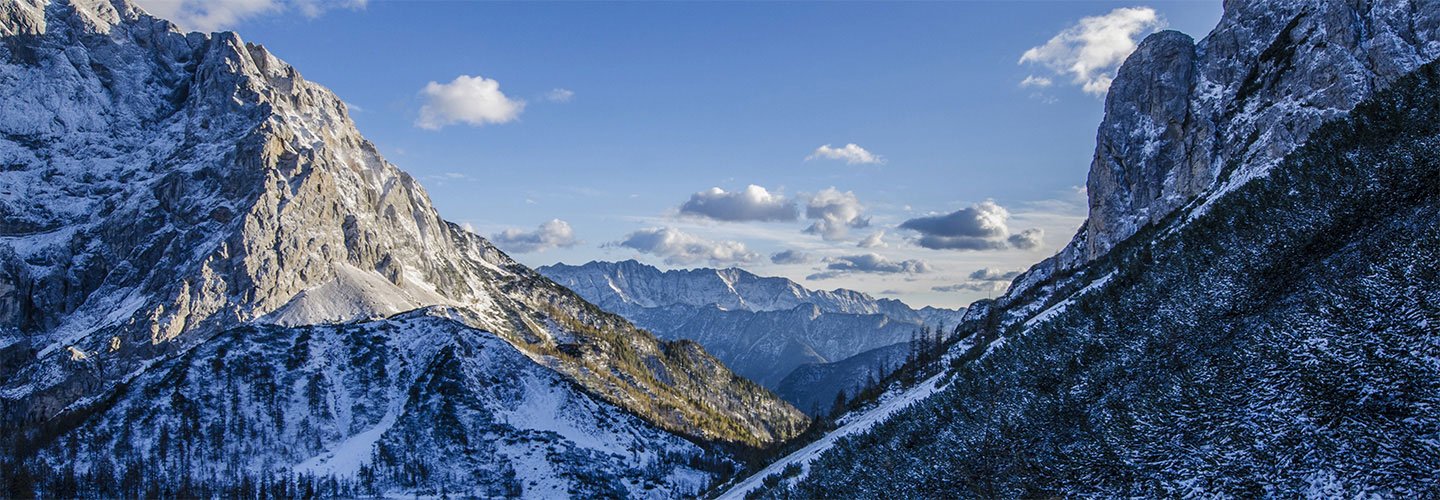
I was climbing the south face of the mountain, which means that in this glorious weather, the snow was melting during the day and freezing in the evening. In the couple of weeks before I arrived, there were a few avalanches in this area, so there were avalanche debris fields on the way. Those, of course, were also melting and freezing at different times of day. When you climb, especially a steep path, you often look at what’s immediately in front of you, one step at a time. As I followed the trail (meaning someone else’s footsteps), I ended up on a huge field of solid ice – melted and frozen again, avalanche debris. For a few minutes before that, I was wondering whether I should swap my trekking poles for an ice axe. I should have…
It was so icy that the poles had no chance. I even struggled to make steps in the ice with crampons. I desperately needed to get the ice axe, but taking off the backpack was out of the question. I could hardly stand still safely, not to mention making any moves. There were bare rocks a few steps away. Steps meant moving, but somehow I managed that! I got the ice axe and hoped I’d be able to climb up. I took a few steps and then I got stuck! Going up was too dangerous, simply mental. Going down was almost equally bad. With any move, I was risking sliding down on that ice and there was a long way to fall. I don’t think that I’d have been able to stop with the ice axe if I fell. I felt unable to make a single step, but I was aware that standing still wasn’t an option either.

Believe me… I did fear… and I honestly thought that I might not see you – all of you, any of you – again. Oh, and I was praying hard. I had Matt Maher singing in my ears ‘Lord, I need you…’ and the Community of Taize chanting ‘O God, keep me safe…’. I couldn’t quite keep up with singing out loud as I normally do, but I did in my head. It’s funny how those playlists always have the right lyrics at the right time.

I think in ‘The Shack’ someone said:

‘You are not stuck because you can’t.
You are stuck because you won’t.’

I knew I couldn’t stay there. I looked around or as much around as I could without moving and decided that my only chance was to try to walk across this ice to the other side of this gully or couloir – whatever a technical term for this is. At that point, the sun came up and shone right in front of me. Almost immediately, it softened ever so slightly that ice in front of me. I have no idea how long it took – too long for my liking – but I made it to the other side and then down to a decent path to the pass. It took a while to shake it off.

We get stuck in various ways in various situations in life. It’s rarely about being physically stuck like I was on that iced mountain. The mechanism of getting unstuck is the same, though. Getting unstuck is a choice. It’s a decision which only you can make. You may remain stuck because you are afraid of making a move, taking a risk (whatever it is), but remaining stuck is a risk in itself. It might not be an immediate risk and it might not be life-threatening like it was in this case, but it is a risk.

Where are you stuck today? What’s your solid ice field to cross?

What is the risk that you need to take?

What freedom will it bring you if you make this move?

What are you risking remaining stuck?

Be still

After a very long journey yesterday, I had a late start this morning. I decided to warm up on the way to Morskie Oko. For those unfamiliar with Polish mountains, it is a long walk, but a very easy and accessible. Being accessible means that it’s also very busy. Waiting in a queue for the tickets to the National Park, I wondered whether it was the best choice. I wasn’t going to turn back, so I put some sun cream and sunglasses on and set off.

I was surprised how easily I could block out the chatter around me. The trail wasn’t as busy as it could be, but it wasn’t the solitude of the Pyrenees. As soon as I blocked out the human voices, I realised how still everything was. I’m used to this valley at different times of year when there is so much life and sound in nature. Today everything is SO still. The river and the streams that are a source of sound at any other time are totally frozen. Maybe with an exception of one our most famous waterfalls, but at the moment this usually roaring waterfall turned into a very quiet stream and you can hear it only for a moment. I had my headphones with music and audiobooks, but I decide to put them in my backpack. This stillness is so profound.

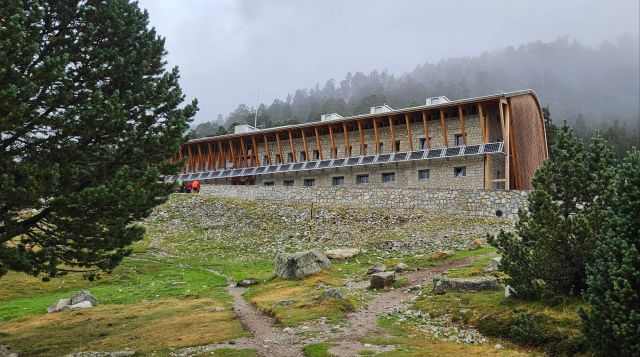
After stopping at the mountain hut, I decided to go up the yellow trail for a while. I intended only to go to a good spot to take a few pictures of the frozen lake and the hut itself. I didn’t have any equipment with me apart from the trekking poles. I didn’t need crampons or ice-axe for my original plan. I kept walking up thinking that in the worst-case scenario, I’d go back the same way. The conditions up to the final climb were fantastic and even that last section was doable if one knew how. I met a few people, but those places are away from the madding crowd which makes this stillness even more profound. You could hear a bird every now and then, but apart from that there was only the sound of snow crunching under your feet, your heartbeat, your breathing… None of those could spoil that sense of stillness. It’s funny, I didn’t even sing. Neither out loud or in my head. Apart from maybe two moments when the views were so stunning, that ‘O Lord my God when I in awesome wonder…’ simply sprang to my lips. It made me realise that you can well filter out any external noise if you only want to. I often thought that I needed a quiet place to achieve this. An excuse? Possibly…

Every time I allow it to happen, this sense of stillness makes me go deeper into my heart. When I do it like that, I’m at peace.

Be still…

Hear you heart…

Hear your thoughts…

See what’s there and where it will take you…

The art of subtraction

‘Subtract all that is distracting and unnecessary until only the essential remains.’

Ali Kazal on Unsplash

If you read my previous posts, you will know that I packed pretty badly for my trip to the Pyrenees. Just before that trip I tried to reflect on things I do and carry in life in general. It wasn’t an easy process and I’m sure that it affected my real packing for the Pyrenees. I had to literally go through the content of my backpack to see what I could and was willing to leave behind then and there to make my backpack lighter. It was interesting to see what was there, what I didn’t need and was ready to leave behind, what I didn’t need, but had too much value to let it go. It was a painful, but priceless lesson.

If you ever hiked, you know that you don’t always need to take the same stuff. Your backpack will be filled with different things depending on various factors: when and where you are going, solo of with other people, how long for etc. You wouldn’t take an ice-axe and crampons in mid-summer (and below the glacier) or short and sandals in winter… Or ropes and harness if you are not going rock climbing… Or ten t-shirts for a weekend… You wouldn’t take to the mountain hut the same gear as you would need while staying in shelters… Or would you… That was my major mistake the last time. I had everything to stay in cabanas – camping stove, cooking pots, super sleeping mat etc. All totally unnecessary in the mountain huts.

There are also things that you always pack – wherever and whenever you go. Things like a light, compass and map. Some food and water, waterproofs and sun cream – just to name a few.

For years my backpacks have been generally getting smaller, but I still haven’t reached the right size. Subtracting is an art. Focusing on the essential is an art.

Working on my metaphorical backpack is more difficult. I know that I need to check its content more often.

What do you carry in yours?

What are your essentials?

What weighs you down?

What can you leave behind? Temporarily or permanently…

What weight can you share with others?

What have you forgotten?